What the new entry systems mean for your next trip
Europe travel entry requirements 2026 are no longer an abstract policy debate. For many travelers planning to visit Europe this spring, the new Entry/Exit System, usually called the EES system, already shapes how long they queue at the border. Those lines are the visible edge of a deeper shift in how European countries register every entry and exit at their external frontiers.
The EES is a shared electronic travel database that records biometric data and the time and place of each entry and exit for non-EU nationals entering the Schengen area for a short stay. It replaces manual passport stamping in 29 European countries that apply Schengen rules (the 27 Schengen states in the EU plus Iceland and Norway, Switzerland and Liechtenstein) and will cover most visa-exempt visitors who previously just flashed a passport and walked through. The European Union, as implementer of this system, aims to enhance security, prevent overstays, and streamline checks, but the early implementation period has been rough at several major hubs, as noted in airport and border-police briefings and European Commission implementation updates.
At airports such as Brussels, Amsterdam Schiphol, and Paris Charles de Gaulle, travelers have reported queues of around two to three hours as officers guide first-time users through biometric kiosks at each external border, especially during peak holiday periods. In 2023–2024, for example, Schiphol and Brussels Airport both warned in public advisories that border-control waiting times could exceed two hours on busy mornings. The biometric capture for the EES usually involves fingerprints and a facial image, and the first enrollment can take several minutes per person when systems lag. Once your data are stored and remain valid for three years in the database, later trips through the same area should be faster, but only if airlines and border police align staffing with the new requirements and follow the operational guidance published by the European Commission.
For independent travelers, the practical question is simple: how will this change the feel of arrival in Europe? Expect a more structured, less improvisational process at the border, with officers focused on whether you meet entry rules for your planned stay rather than on small talk. If you are used to spontaneous travel authorisation decisions at the counter, the new electronic travel records will make your previous movements across Europe visible in seconds.
The EES does not itself grant a visa or any separate travel authorization, but it underpins both. When you apply for a Schengen visa in future, consulates will check your past entries and exits in the system rather than relying on stamps. Even if you are visa exempt and entering for tourism, your passport will be scanned, your biometric profile checked, and your permitted period of stay in the Schengen area calculated automatically.
For now, the EES applies only at the external border of the Schengen area, not between European countries inside it. That means a flight from New York to Lisbon triggers an EES check, while a later train from Lisbon to Madrid does not. Overland travelers entering from non-Schengen neighbours such as Serbia or Morocco will also pass through EES kiosks, so the impact is not limited to large airports.
ETIAS, EES and how to time your airport transits
While the EES is already live, the European Travel Information and Authorisation System, known as ETIAS, is the next layer of European border entry rules for 2026. ETIAS travel authorization will be required for more than sixty visa-exempt nationalities, including citizens of the United States, Canada, and Australia. According to current European Union planning and Commission statements, ETIAS is scheduled to be implemented by late 2026, and travelers should expect a transition period where both systems bed in together.
ETIAS is an electronic travel authorisation, similar in spirit to the United States ESTA or the UK ETA, and it will apply to short-stay visits of up to ninety days in any one hundred eighty day period in the Schengen area. You will apply for ETIAS online before you travel to Europe, pay a fee of seven euros as set out in EU regulations and confirmed on official ETIAS information pages, and receive a digital approval linked to your passport. The official ETIAS platform will check your data against security databases, and once granted, the travel authorisation should remain valid for three years or until your passport expires, whichever comes first.
In practice, ETIAS travel authorisation and the EES system will work together at the border to decide whether you meet entry conditions. Airline staff will check that you hold a valid passport and, where required, a valid ETIAS before boarding, while border officers will use the EES to confirm your remaining allowed stay. For most visa-exempt travelers, the days of improvising a last-minute trip without any prior electronic travel clearance will end once ETIAS is fully enforced.
The rougher part of the rollout so far has been at large hubs where many countries funnel connecting passengers through the same limited set of kiosks. Brussels Airport and Amsterdam Schiphol have reported queues stretching beyond two hours during peak morning banks, especially when several long-haul flights arrive together, and local authorities have warned travelers to arrive earlier than usual. Smaller airports in European countries such as Porto, Valencia, or Tallinn have generally coped better, with shorter lines and staff able to walk travelers through the new steps.
For trip planning, this means you should rethink what counts as a safe connection in Europe. If you are entering the Schengen area for the first time on a given trip, avoid tight transits under three hours at the first airport where you cross the external border. A ninety-minute layover that once felt generous can evaporate quickly when half the passengers on your flight are enrolling in the EES for the first time.
Overland travelers should also factor in extra time at ferry ports and land crossings where the EES kiosks are still bedding in. Queues at the France–United Kingdom border, for example, already fluctuate with seasonal traffic, and the addition of biometric checks can stretch the duration of a long drive. If your itinerary strings together several European countries by rail or car, build in buffers on the first day so that a slow border crossing does not derail the rest of your stay.
How to prepare your documents and yourself for smoother borders
For anyone reading up on Europe travel entry requirements 2026, the most effective step is still deceptively simple: check your passport early. Under the Schengen Borders Code, your travel document should generally remain valid for at least three months beyond your intended exit date, and the EES will flag documents that fall short of that requirement. Some airlines and non-European destinations, however, apply a six-month validity rule as a condition of carriage, so renewing in advance is far easier than arguing with a gate agent about whether you can board a full flight to Europe.
Before you travel to Europe, confirm whether you are visa exempt for the Schengen area or whether you must apply for a traditional visa at a consulate. If you are visa exempt now, you can expect that ETIAS will apply to you once the system is live, so plan to submit your ETIAS application several weeks before departure rather than the night before. The European Union has stated that the ETIAS application fee will be seven euros, and the process will run entirely online through the official ETIAS portal.
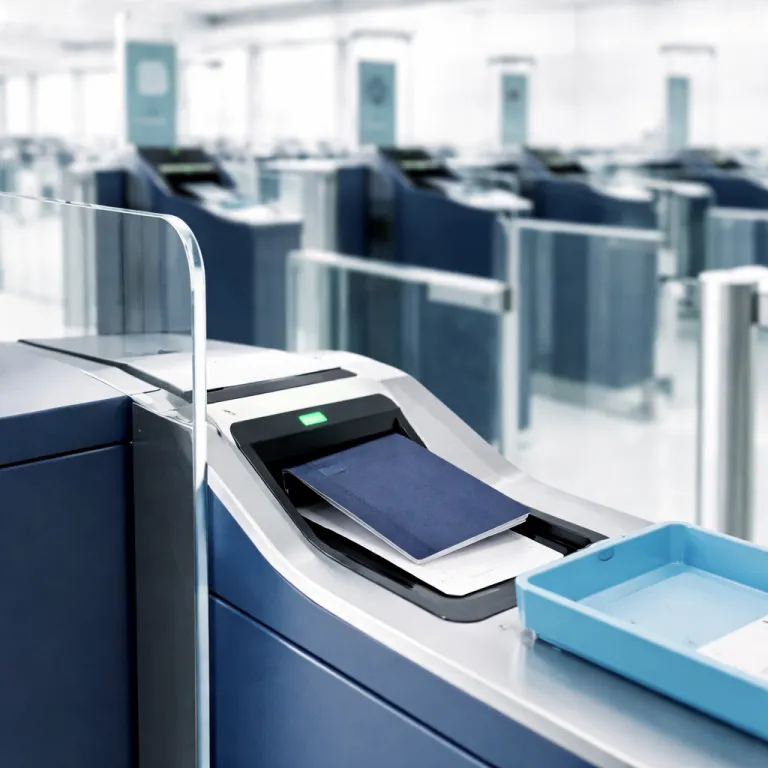
At the airport, the first EES enrollment will feel more like a structured check-in than a casual passport stamp. You will scan your passport, place your fingers on a biometric reader, and look into a camera while the system captures your facial image, and border officers will then verify the data on screen. For most travelers, the process itself takes only a few minutes, but bottlenecks arise when many passengers reach the kiosks at once or when the electronic travel systems slow under heavy load.
To reduce stress, arrive earlier than you would have in the past, especially at airports known for congestion. For long-haul arrivals into the Schengen area, plan to land with at least four hours before any onward rail departure, giving yourself room for both border formalities and baggage delays. If you must make a same-day connection, choose a routing where your first entry into Europe happens at an airport with a reputation for efficient border control rather than at one already struggling.
Independent travelers who value spontaneity will need to adapt their planning habits to meet entry rules that are now enforced by interconnected databases rather than by individual discretion. Keep digital and paper copies of your accommodation bookings, return ticket, and proof of funds, as officers can still ask for them even when the EES and ETIAS show that your stay is within the allowed period. The more clearly you can show that your trip fits within the rules, the faster the conversation at the counter tends to be.
The broader context is a Europe that is digitising its borders through the EES, ETIAS, and the United Kingdom ETA, with the stated goals of enhancing security and smoothing legitimate travel. The European Union and the UK government present these tools as part of a coordinated effort to monitor traveler movements while still facilitating tourism and business. For you as a traveler, the trade-off is clear: a little more preparation before departure in exchange for a border experience that, once the systems stabilise, should become more predictable than the paper stamp era ever was.
Key figures on new European entry systems
- The Entry/Exit System records entries and exits of non-EU nationals in 29 European countries that participate in the shared border database for the Schengen area, including EU and associated Schengen states such as Iceland, Norway, Switzerland, and Liechtenstein.
- The ETIAS application fee is set at seven euros per traveler for eligible visa-exempt nationalities visiting the Schengen area, according to current EU rules and official ETIAS information published by the European Commission.
- The United Kingdom Electronic Travel Authorisation carries a fee of ten pounds for most travelers who require pre-travel clearance to enter the UK, based on the latest UK government guidance on the ETA scheme.
Common questions about EES and ETIAS
What is the EES and how does it affect my trip?
The Entry/Exit System is a shared European database that records the time, place, and biometric details of each entry and exit by non-EU nationals at the external borders of 29 participating countries. For most travelers, it replaces manual passport stamps with an automated calculation of how long you can stay in the Schengen area on a given trip. You will still need a visa or, if you are visa exempt, a valid passport and any required electronic travel authorization, but the EES will be the tool that tracks your movements between arrivals and departures.
When will ETIAS start and who will need it?
ETIAS, the European Travel Information and Authorisation System, is scheduled to become operational by late 2026 according to current European Union planning. Once enforced, it will apply to more than sixty visa-exempt nationalities, including citizens of the United States, Canada, Australia, and several Asian and Latin American countries, who plan a short stay in the Schengen area. These travelers will need to apply online, pay a seven euro fee, and receive an approved ETIAS linked to their passport before boarding transport to Europe.
Is the United Kingdom part of these new European systems?
The United Kingdom is not part of the Schengen area and will not use the EES or ETIAS systems at its borders. Instead, the UK is rolling out its own Electronic Travel Authorisation, known as the UK ETA, which will apply to many visa-exempt visitors entering the country. Travelers planning to combine the UK with Schengen countries in one itinerary will therefore need to understand and comply with two separate sets of electronic travel rules.