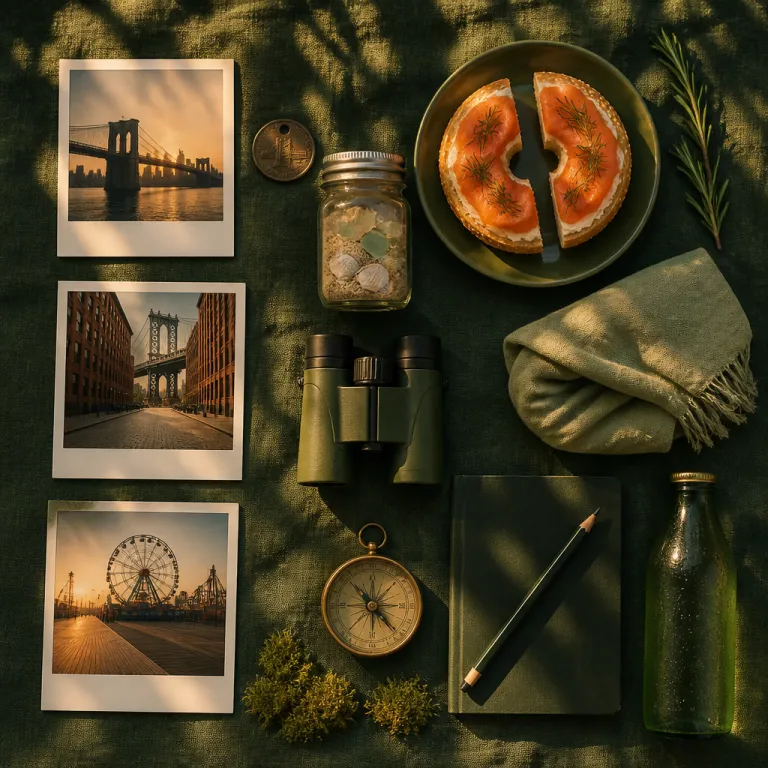
Planning where to go in Brooklyn for your first full day
When travellers ask where to go in Brooklyn on a first day, I usually start with the waterfront because it orients you instantly. From the moment you step onto the paths of Brooklyn Bridge Park (main entrances around Old Fulton Street and Atlantic Avenue), the sweep of the Manhattan skyline and the curve of the East River give you a clear mental map of how Manhattan and Brooklyn face each other. Use this first Brooklyn day to walk, pause, and check viewpoints rather than rushing between too many things the borough has to offer.
Brooklyn Bridge Park stretches for about 85 acres along the river, and each pier feels like its own neighborhood with lawns, sports courts, and quiet corners. From here you can see both the Brooklyn Bridge and the Manhattan Bridge, and the contrast between the stone arches of one bridge and the steel geometry of the other creates a classic New York panorama. Plan at least half a day here to find your favourite angle on the Manhattan skyline, then continue south through the park until you reach the ferry piers that link lower Manhattan and Brooklyn in just a few minutes; the closest subway stops are High Street–Brooklyn Bridge (A/C), Clark Street (2/3), and York Street (F), all roughly 10–20 minutes from lower Manhattan.
To understand where to go in Brooklyn next, look back at the city from the water by taking a short East River ferry ride. The NYC Ferry East River route between DUMBO, Wall Street in lower Manhattan, and Williamsburg gives you a moving gallery of bridges, warehouses, and new towers that define this part of New York. As you glide past, you will see how each area along the river has its own character, from the cobbled streets of DUMBO to the converted factories of Williamsburg and the denser towers of downtown Brooklyn; typical rides cost only a few dollars and take 5–15 minutes between stops, so you can easily fit a round trip into an afternoon—aim for late golden hour if you want softer light and fewer harsh shadows in your photos.
DUMBO, Brooklyn Bridge, and the art of walking between boroughs
If you want to feel the scale of New York City under your feet, start in DUMBO and walk the Brooklyn Bridge towards Manhattan. The neighborhood name stands for Down Under the Manhattan Bridge Overpass, and this compact area sits between the Brooklyn Bridge and the Manhattan Bridge with cobblestone street views that frame the Manhattan skyline perfectly. Before you cross, check the classic photo spot on Washington Street (between Front and Water Streets) where the steel towers of the Manhattan Bridge rise between red brick warehouses and the Empire State Building peeks through in the distance; arrive before 9 a.m. on weekdays if you prefer fewer tripods and wedding shoots.
From DUMBO, climb the ramp to the wooden pedestrian deck of the Brooklyn Bridge and allow at least forty minutes for the crossing if you like to stop for photos. Looking west, you see lower Manhattan and the harbour, while to the east the industrial edges of Brooklyn and Queens stretch along the East River with ferries cutting across the current. This is one of the most memorable things to do on any Brooklyn day because it connects two boroughs in a single slow walk, and it helps you understand how Manhattan and Brooklyn relate to each other beyond the subway map; the pedestrian entrance on the Brooklyn side sits near the intersection of Tillary Street and Brooklyn Bridge Boulevard, about a 10-minute walk from the High Street–Brooklyn Bridge subway station.
Once you reach the Manhattan side, you can either explore the financial district or turn back and walk the bridge again towards Brooklyn for a different perspective. Many travellers choose to return to DUMBO for a late afternoon break in a café or to sit on the grass at Brooklyn Bridge Park, watching the lights come on across the river as the city shifts from day to night. If you are planning a wider itinerary that includes other urban waterfronts, you will notice how DUMBO’s compact area offers a rich mix of food, art, and skyline views in a small radius; you can reach DUMBO via the F train to York Street or the A/C to High Street in about 10–15 minutes from lower Manhattan, according to MTA travel times, and you should expect to spend at least two to three hours between the streets, the bridge, and the park.
Brooklyn Heights, the promenade, and classic New York elegance
For travellers wondering where to go in Brooklyn for quieter streets and historic charm, Brooklyn Heights is the answer. This neighborhood sits just south of the Brooklyn Bridge and rises gently above the waterfront, with tree lined street grids and brownstone houses that feel a world away from the glass towers of downtown Brooklyn. It is one of the best areas in New York for a relaxed city walk, especially if you enjoy architecture and leafy residential blocks; start around Montague Street and Henry Street for an easy introduction to the area.
The Heights Promenade is the star, a long pedestrian terrace that runs above the highway with uninterrupted views of the East River, lower Manhattan, and the Statue of Liberty in the distance. From here you can see Brooklyn Bridge Park directly below, the Manhattan skyline across the river, and the constant movement of ferries and barges that keep New York City’s harbour alive. Many locals consider this promenade one of the great free attractions in the city, and it is easy to see why when sunset turns the glass towers of Manhattan and Brooklyn gold; allow at least an hour to stroll from the entrance at Montague Street to the southern end near Remsen Street, pausing on the benches that regulars quietly claim as their “living room” views.
After your promenade stroll, wander back into the interior streets of Brooklyn Heights to find small churches, pocket parks, and cafés where you can pause over coffee and plan the rest of your Brooklyn day. If you are comparing this historic district with other coastal city escapes, you will notice that Brooklyn Heights offers a uniquely urban version of waterfront calm. It is a great area to check Brooklyn from above before heading back down to the river for more active experiences, and you can reach the neighborhood easily via the 2/3 trains to Clark Street or the R train to Court Street, which typically take around 15–20 minutes from midtown Manhattan; budget two to three hours to combine the promenade, a short residential wander, and a café stop.
Williamsburg, Domino Park, and Brooklyn Brewery for creative energy
Anyone asking where to go in Brooklyn for nightlife, creative energy, and independent shops will feel at home in Williamsburg. This neighborhood stretches along the East River north of the Williamsburg Bridge, and it has evolved from an industrial zone into one of the most dynamic places in New York City for music venues, galleries, and inventive food. The streets here are busy late into the night, yet you can still find quiet corners near the water where the Manhattan skyline feels almost close enough to touch; Bedford Avenue and Wythe Avenue form the main spines for browsing and bar hopping.
Domino Park is a highlight, a narrow waterfront park built on the site of a former sugar refinery that preserves industrial structures as sculptural elements. From its elevated walkway you can check views of the Williamsburg Bridge, the Manhattan Bridge further south, and the towers of midtown Manhattan rising beyond the river, which makes this a rewarding stop on a clear day. Families, couples, and solo travellers all share the lawns and seating steps, and the park connects easily to the surrounding street grid where you can find cafés, record shops, and small galleries; plan 60–90 minutes here, and aim for late afternoon on weekends when the atmosphere is lively but not yet packed.
Just inland, Brooklyn Brewery offers tours and tastings that showcase how the local craft beer scene helped define Williamsburg’s identity. Spending a Brooklyn day between Domino Park, the brewery, and the nearby food market style halls gives you a rounded sense of how this part of the borough balances leisure, creativity, and industry. If you are interested in how cooler climate destinations are reshaping urban travel, recent analysis of the “coolcation” trend and northern city bookings offers useful context for planning your own mix of riverfront parks, cultural venues, and evening bars in Williamsburg and beyond; check Brooklyn Brewery’s official site for current opening hours and tour prices (tastings typically start around the cost of a single drink, with guided tours slightly higher), and use the L train to Bedford Avenue or the NYC Ferry to North Williamsburg for straightforward access—set aside at least half a day to explore.
Prospect Park, Brooklyn Museum, and a full cultural day inland
Travellers who ask where to go in Brooklyn beyond the waterfront should dedicate at least one full day to the cultural spine that runs through the borough’s centre. Prospect Park, designed by the same landscape architects as Central Park, covers about 526 acres and offers meadows, a lake, woodland trails, and even a small zoo, which makes it one of the most significant urban green spaces in New York City. This park is ideal for running, cycling, or simply sitting on the grass with a takeaway lunch from a nearby food market or deli; enter near Grand Army Plaza for a grand introduction or at Prospect Park West and 3rd Street for a quieter, more local feel.
On the park’s eastern edge, the Brooklyn Museum anchors a major cultural area with a collection of around 1.5 million artworks ranging from ancient Egyptian pieces to contemporary installations. The scale of the galleries means you can easily spend half a day here, especially if you check temporary exhibitions that often focus on social history, design, or underrepresented artists from New York and beyond. Just next door, the Brooklyn Botanic Garden adds another layer to the experience, particularly in spring when cherry blossoms turn the paths into soft pink tunnels that attract both locals and visitors; the museum and garden usually open from late morning into the late afternoon, with ticket prices generally in the moderate range for major museums and gardens and free or reduced hours on select days listed on their official sites.
Combining Prospect Park, the museum, and the gardens creates one of the best things you can do inland when deciding how to explore Brooklyn for culture and nature in a single loop. Use public transit or a rented bike to move between this area and downtown Brooklyn, where you can end the day with dinner on a lively street lined with restaurants representing many of the communities that call the borough home. Walking, biking, and public transit are popular options for getting around, and Brooklyn offers attractions year-round, with each season providing unique experiences, so you can confidently plan this cultural circuit in any month; the 2/3 and 4/5 subway lines stop at Eastern Parkway–Brooklyn Museum, and the Q/B lines serve Prospect Park, with journeys from Manhattan often taking 25–35 minutes and a full visit here easily filling six to eight hours.
Coney Island, state parks, and coastal escapes at the edge of the city
When people wonder where to go in Brooklyn for sea air and classic amusement rides, Coney Island is the obvious answer. This historic amusement area sits on the Atlantic edge of the borough, with a long sandy beach, a wooden boardwalk, and roller coasters that have defined New York leisure culture for generations. It is one of the best places to feel how the city relaxes on hot days, as families, groups of friends, and solo visitors share the same stretch of coast; the main boardwalk runs between West 37th Street and Brighton 15th Street, with Coney Island–Stillwell Avenue as the key subway hub.
A typical Brooklyn day here might start with a walk along the boardwalk, continue with a swim or a ride on the famous wooden coaster, and end with sunset views back towards the rest of the city. The area connects to nearby state park style coastal reserves and quieter beaches, so you can easily combine the bright lights of the amusement district with calmer stretches of sand if you prefer a more peaceful atmosphere. Food is part of the experience, from long standing hot dog stands to newer vendors that reflect the borough’s diverse communities, and you will find both quick snacks and sit down meals within a short walk of the subway; expect ride tickets and amusement wristbands to range from the price of a single attraction to higher bundles for unlimited access, and plan four to six hours if you want both beach time and rides.
For travellers comparing where to go in Brooklyn with other coastal city breaks, Coney Island offers a distinctly urban version of the seaside that still feels very local. It is easy to reach from downtown Brooklyn by subway, and the journey itself shows how the neighborhoods change from dense street grids to lower buildings as you approach the water. If you have already explored other coastal destinations and are now asking what to see in this part of New York next, a day at Coney Island balances your itinerary with fresh air, open horizons, and a different angle on the city’s relationship with the ocean; the D, F, N, and Q subway lines all run to Coney Island–Stillwell Avenue, with travel times from midtown Manhattan often around one hour, according to MTA estimates.
Key figures for planning where to go in Brooklyn
- Brooklyn Bridge Park covers about 85 acres of waterfront, giving visitors multiple piers and lawns to explore in a single day, according to the park’s official information; most travellers spend three to five hours here including photo stops and a café break.
- Prospect Park extends over roughly 526 acres, which makes it one of the largest green spaces in New York City and a major reason to check the borough beyond the riverfront, based on data from the Prospect Park Alliance; runners often complete the 3.35-mile loop in under an hour, while leisurely visitors may spend half a day.
- The Brooklyn Museum holds around 1.5 million artworks, a scale that supports full day visits for travellers interested in art and history, as reported by the museum itself; general admission tickets typically fall in the moderate range for major U.S. museums, with discounts for students, seniors, and children.
- Brooklyn’s main attractions, including Brooklyn Bridge Park, the Brooklyn Museum, Prospect Park, Coney Island, and DUMBO, are accessible year round, with each season offering different experiences such as cherry blossoms, beach days, autumn foliage, or winter ice skating, according to local tourism guidance; plan extra time on summer weekends and holiday periods when crowds peak.
FAQ about where to go in Brooklyn
What are the top attractions to prioritise on a first visit ?
For a first time trip, focus on Brooklyn Bridge Park, DUMBO, Brooklyn Heights, Prospect Park, the Brooklyn Museum, and Coney Island. This mix gives you river views, historic neighborhoods, major green spaces, and the classic seaside boardwalk in a balanced itinerary. You can comfortably cover the waterfront highlights in one Brooklyn day and then use another day for the inland cultural area, adding Williamsburg in the evening if you still have energy.
How should I get around Brooklyn without a car ?
Walking, biking, and public transit are the most efficient ways to move between neighborhoods in Brooklyn. The subway connects downtown Brooklyn, Williamsburg, Prospect Park, and Coney Island, while ferries link DUMBO, Brooklyn Bridge Park, and parts of the East River waterfront to lower Manhattan. For shorter distances within a single area, such as between the Heights Promenade and the river, walking gives you the best sense of the local street life, and bike share docks near major parks make it easy to cover slightly longer stretches.
When is the best time of year to visit Brooklyn ?
Brooklyn offers worthwhile experiences in every season, but spring and autumn are particularly comfortable for long walks between parks and neighborhoods. Summer is ideal for Coney Island and evening strolls along the river, while winter brings quieter museums and the chance to see Prospect Park under snow. Because attractions like Brooklyn Bridge Park, the Brooklyn Museum, and DUMBO operate year round, you can plan your time in the borough based on your preferred weather and crowd levels rather than worrying about closures.
How much time do I need to see the main Brooklyn highlights ?
Two full days allow you to experience the key areas without rushing, with one day focused on the East River waterfront and another on Prospect Park, the Brooklyn Museum, and nearby neighborhoods. If you can add a third day, include Coney Island and extra time in Williamsburg or Brooklyn Heights for more relaxed exploration. Shorter visits are still rewarding, but you will need to prioritise either river views or inland culture when deciding how to structure your Brooklyn itinerary.
Is Brooklyn suitable for families and solo travellers alike ?
Brooklyn works very well for both families and solo visitors because parks, museums, and waterfront areas offer safe, well used public spaces. Families often gravitate towards Prospect Park, Brooklyn Bridge Park, and Coney Island, while solo travellers enjoy the cafés, galleries, and nightlife in Williamsburg and DUMBO. In every neighborhood you will find a mix of residents and visitors, which creates a welcoming atmosphere for different travel styles, and you can adjust your days to be as busy or as low key as you like.