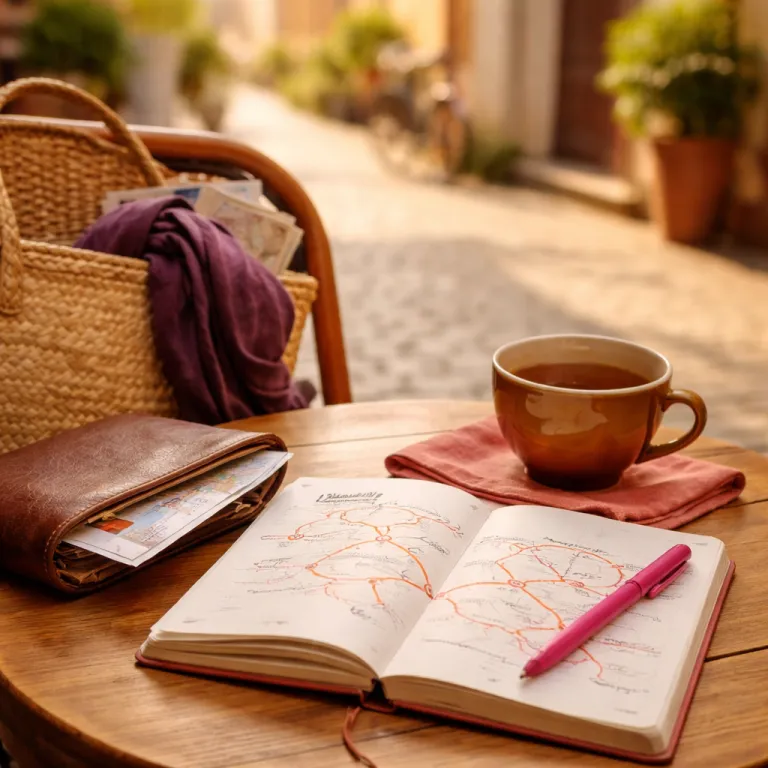
Slow travel is not a trend, it is a reset
Slow travel keeps being framed as a shiny travel trend for the next year, but seasoned travelers know it is simply a return to how independent travel once worked. Before cheap flights rewired our planning instincts, a typical trip meant longer stays, fewer destinations, and more time with local people in real neighborhoods. When you travel slow again, you are not chasing the best Instagram angle ; you are rebuilding a relationship with time, place, and your own attention.
Data from recent travel trends reports shows a clear shift toward longer stays and fewer trips packed into a single vacation, and that shift is not an accident. When travelers cut the number of destinations, they reduce transit days, lower the per day cost of the trip, and create space for immersive travel that actually feels like a break. One survey of travelers interested in slow travel found that 91 % of them were actively seeking immersive experiences over fast paced tourism, and that preference is reshaping how travel companies design group travel and small group itineraries.
There is also a psychological reset at work when you choose slow travel instead of a frantic checklist of destinations. Itinerary density correlates negatively with travel satisfaction because every extra flight, train, or island hop adds friction, decision fatigue, and hidden costs that eat into your travel wellness. When you travel slow, you trade the bragging rights of many stamps for the quiet authority of knowing one local culture deeply, and that shift is where the best slow experiences live.
Slow travel is often defined very simply as this : “Travel focusing on immersive, meaningful experiences over fast-paced tourism.” That definition matters because it centers experience rather than distance, and it reminds solo travelers and groups alike that the best trips are not always the longest or the most expensive. When you plan your next travel vacation, ask whether each extra stop adds real experience or just more logistics, and you will start to see how slow travel 2026 is less a fad and more a filter.
For eco conscious travelers, this reset has a climate dimension as well as a personal one. Fewer flights and longer stays mean a lower carbon footprint per trip, and that is especially relevant for long haul journeys to destinations such as South Africa or Costa Rica where the flight is the biggest emissions hit. When you commit to longer stays instead of short stays scattered across many destinations, you give local communities more stable income and give yourself the time to read the place properly, not just skim it.
Slow travel also changes who benefits from your money and your time. When you stay in one neighborhood for several days, you start using the same café, the same produce stall, the same family run guesthouse, and that repetition builds trust with local people. Over the course of a year, that kind of travel best practice supports local culture more than any quick hit group travel package that buses travelers from one photo stop to the next.
The dataset on slow travel highlights three core objectives that align with what many travelers say they want now : deeper cultural connection, sustainable tourism, and enhanced personal well being. Those goals are not abstract marketing lines ; they show up in the way you choose transport, the pace of your days, and the kind of experiences you prioritize. When you read current travel wellness research, you see the same pattern again and again, which is that rest days and unstructured time are not luxuries but the backbone of a satisfying trip.
For solo travel in particular, traveling slow is a safety and confidence tool as much as a philosophy. Solo travelers who give themselves time to understand local norms, learn basic language phrases, and build a small group of familiar faces in a neighborhood bar or café tend to report feeling more secure. That is why many experienced slow travelers quietly argue that travel slow is the travel best strategy for anyone who wants both adventure and a sense of groundedness on the road.
The mathematics of one country, two weeks
To understand why slow travel works, you need to look at the arithmetic of a typical two week vacation and ask where the days actually go. A classic fast itinerary might cram three countries into fourteen days, with multiple flights, border crossings, and hotel changes that sound exciting when you first read them on a screen. In practice, those trips often burn four or five days on transit, packing, and recovery, which means a third of the travel experience is spent in motion rather than in place.
Now imagine the same year, the same budget, but a different structure where you choose one country and two or three destinations connected by rail or short bus rides. You still get variety, but you cut the number of flights, reduce the stress of constant check in and check out, and gain what slow travelers value most, which is unbroken time in a single local culture. Rail revival and so called time tripping trends are not nostalgia ; they are rational responses to the fatigue of airport security lines and the environmental cost of unnecessary flights.
Consider the numbers for a European trip where a traveler wants to visit three capitals in fourteen days. Two intra European flights plus one long haul return might mean four airport days, two jet lag days, and at least three half days lost to packing and transfers, which leaves perhaps seven full days of real experience. If that same traveler chose longer stays in one region, using trains instead of flights, they could reclaim two or three full days for markets, walks, and conversations that actually define immersive travel.
Slow travel also changes how you think about cost per day rather than headline price. An itinerary with fewer destinations often allows you to negotiate better weekly rates on stays, whether that is an apartment in Lisbon, a farm stay in South Africa, or an eco lodge in Costa Rica. When you spread fixed costs such as flights and travel insurance over more days in one place, the per day cost of the trip drops, even if the total travel vacation budget stays the same.
There is a wellness dividend too, and it is not soft. When you build in rest days with no major sights, you give your nervous system a break from constant novelty, which is why many travelers report feeling more restored after a slow travel itinerary than after a packed group travel tour. That is the essence of travel wellness in practice, not scented candles in a hotel spa but the simple act of having time to read a book in a local park without rushing to the next stop.
Eco conscious travelers who want their choices to matter can look at conservation focused analyses of travel choices, such as those discussed in this guide to travel decisions that move the needle on conservation. The pattern is clear : fewer flights, longer stays, and a focus on local experiences have a measurable impact on emissions and on how money flows into community based tourism. When you align your personal travel trends with that evidence, you turn slow travel from a lifestyle aesthetic into a concrete climate action.
For solo travel, the mathematics of time is even more important because every transfer day is a day of extra logistics handled alone. Solo travelers who choose one base for a week or more often find that their social life improves, because they become regulars at a café, a co working space, or a language exchange night. That kind of small group familiarity is hard to build when you are changing destinations every two days, and it is one reason why many solo travelers quietly shift toward slow travel after a few exhausting multi country trips.
When you plan your next trip, try writing two versions of the itinerary on paper. One should be the fast version with many destinations and short stays, and the other should be a slow travel version with longer stays and fewer moves, and then count the true experience days in each. You will usually find that the best slow option gives you more real time in place, more meaningful experiences, and a calmer nervous system, even if the list of destinations looks shorter on your social feed.
Three versions of the same trip : what changes when you slow down
To see how slow travel reshapes a vacation, take a simple case study of a two week trip and split it into three versions. Version one is the classic fast travel plan with three countries, six cities, and a blur of flights, trains, and short stays that leave travelers with a camera roll full of landmarks but a thin sense of place. Version two trims the itinerary to two countries and four destinations, while version three goes all in on slow travel with one country, three bases, and longer stays in each.
In version one, the traveler spends the first two days fighting jet lag, then jumps between capitals every two or three days, often on early morning flights that carve out the heart of the day. Transit eats at least four full days, and the remaining time is sliced into rushed sightseeing blocks, which means there is little space for local culture, spontaneous invitations, or simple rest. Many people return from this kind of trip saying they need a vacation after their vacation, which is a clear sign that the structure, not the destination, was the problem.
Version two, with two countries and four destinations, is an improvement but still carries a lot of friction. There are fewer flights and slightly longer stays, which allows for one or two deeper experiences such as a cooking class with a local family or a day spent on a lesser known island rather than the famous one. Yet the traveler is still packing and unpacking every three days, which keeps their attention on logistics rather than on the immersive travel moments that make a place feel real.
Version three is where slow travel shows its full power, especially for eco conscious travelers and solo travelers who want to feel grounded. With one country and three bases, the traveler can settle into a rhythm, shop at the same market, learn the bus routes, and maybe even join a small group hike or language class that meets several times a week. Over fourteen days, they build relationships with local people, understand the nuances of local culture, and create experiences that feel less like a checklist and more like a temporary life.
This slower version also opens space for purposeful wildlife and conservation experiences that require time, such as spending several days in Akagera National Park on a trip focused on the conservation story behind a surprising African safari. A fast itinerary might squeeze in a single game drive, but a slow traveler can stay long enough to understand how rewilding, community partnerships, and tourism revenue interact. That depth of understanding is what turns travel from consumption into participation, and it is only possible when you resist the urge to move on too quickly.
For group travel, the difference between these versions is amplified because every transfer involves coordinating multiple people, preferences, and energy levels. A small group that commits to longer stays in fewer destinations will usually find that tensions drop, shared rituals emerge, and the group experience feels less like a forced march and more like a shared temporary home. Travel companies that specialize in slow travel itineraries have learned this the hard way, and many now design trips with built in rest days and optional activities to respect different rhythms.
Solo travel also benefits from the version three model because it gives solo travelers time to build micro communities wherever they land. When you stay in one place for a week or more, you can join recurring events, from yoga classes to volunteer days, which is much harder on a fast moving itinerary. That is why many experienced slow travelers say that the best slow trips are the ones where you almost forget you are on vacation and start to feel like a temporary local instead.
Across all three versions, the destinations might be the same on paper, but the lived experience is radically different. The fast version maximizes distance and variety at the expense of depth, while the slow travel version maximizes depth, rest, and connection, even if the list of places is shorter. When you read accounts from travelers who have tried both, a pattern emerges : the trips they remember most vividly are almost always the ones where they stayed put long enough for the place to change them.
How slow travel changes what you pack, book, and plan
Once you commit to slow travel, the practical side of your trip planning shifts in subtle but important ways. Packing becomes less about preparing for every possible scenario and more about building a flexible, durable wardrobe that works for many days in one climate. You start to think in terms of laundry access, walking comfort, and local norms rather than in terms of outfit variety for a string of different destinations.
Booking also changes, because longer stays unlock different kinds of accommodation and community based options that are not viable for short stays. Farm stays, eco lodges, and family run guesthouses often prefer travelers who can commit to several days or a week, and they may offer better rates or richer experiences in return. This is where travel wellness and travel slow intersect, because staying put reduces the stress of constant check in and check out while giving you a stable base for daily routines.
Planning your days under a slow travel philosophy means leaving deliberate gaps in the calendar. Instead of scheduling every hour, you might anchor each day with one main experience, such as a hike, a museum, or a market visit, and leave the rest open for whatever the place offers. That flexibility is what allows you to accept a last minute invitation from a local group, linger over a long lunch, or simply read in a café while watching people move through their own routines.
Destination choice also looks different when you prioritize slow travel 2026 as a mindset rather than a list of hotspots. The question is no longer which place is the single best destination for this year, but which destinations reward longer stays with layered local culture, accessible nature, and a strong sense of community. Places like Costa Rica, with its network of conservation projects and eco lodges, or South Africa, with its mix of cities, wine regions, and coastal towns, are ideal because they offer many distinct experiences within a single country.
Even classic city breaks can be reimagined through a slow travel lens by choosing one neighborhood and treating it as a temporary home. In Oaxaca, for example, planning around the city’s festival calendar and using a detailed guide to a year of layered cultural celebrations can turn a simple trip into an extended immersion. Instead of hopping between multiple Mexican cities, you might spend ten days in and around Oaxaca, using local buses to reach nearby villages and markets while returning each night to the same familiar street.
Reading destination guides with a slow traveler mindset also changes what you look for in a min read summary or a long form feature. You start to value information about weekly markets, seasonal rhythms, and community events over lists of must see attractions, because those are the details that shape your actual days. When you plan a travel vacation this way, you are less swayed by rankings of the travel best beaches or the latest viral island and more interested in how a place feels on a Tuesday afternoon.
Finally, slow travel reframes what success looks like for your trip. Instead of counting countries or ticking off famous sights, you might measure the journey by the relationships you formed, the local customs you learned, or the small routines that made you feel at home. That is the quiet promise of slow travel 2026 for eco conscious travelers and solo travelers alike : not the postcard, but the walk behind it.
Key figures behind the shift toward slow travel
- According to a Vrbo survey of travelers interested in slow travel, 91 % of respondents said they were seeking immersive experiences rather than fast paced tourism, which confirms the growing appetite for depth over distance.
- Recent travel trend reports show that itineraries with longer stays in fewer destinations are associated with lower per day costs and higher reported satisfaction, because fixed expenses such as flights and insurance are spread over more days in one place.
- Rail focused trips have grown significantly in popularity in Europe, aligning with the rail revival trend and offering travelers a lower carbon alternative to short haul flights while supporting slow travel habits.
- Destinations that encourage community based tourism, such as farm stays and conservation lodges, report more stable income when travelers choose week long stays instead of two night short stays, which strengthens local economies.
- Post pandemic surveys across multiple travel companies indicate a clear shift toward wellness oriented travel, with travelers prioritizing rest days, nature access, and local culture immersion as key markers of a successful vacation.